
Louisa’s vision becomes reality
Kirkpatrick Policy Group
Louisa McCune used to say that getting a new municipal animal shelter included on the list of MAPS 4 projects was Kirkpatrick Policy Group’s first major advocacy victory.
Her vision is now a reality.
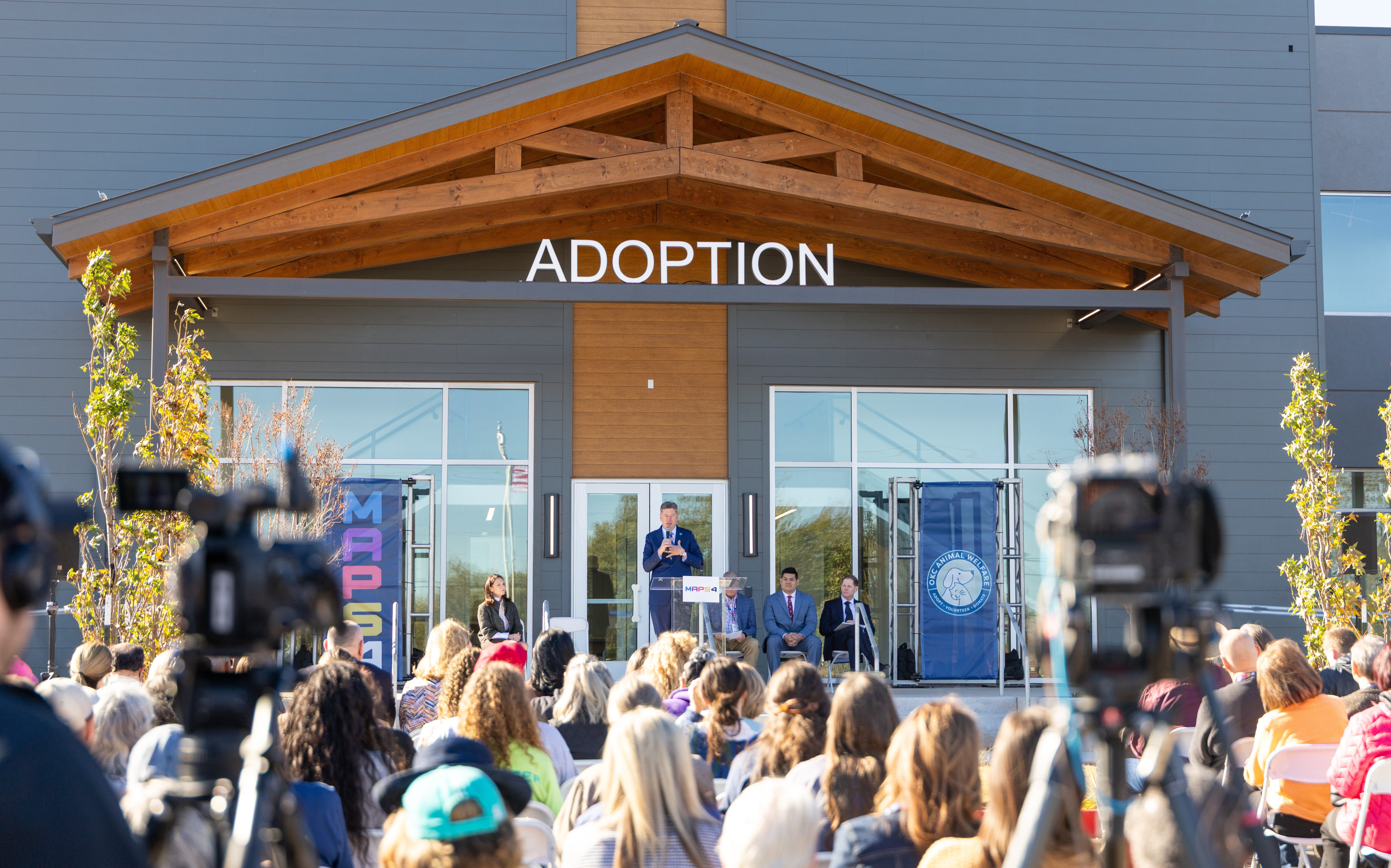
Oklahoma City officials, Louisa’s family, animal advocates, and the public celebrated completion of the new shelter—a 70,000-square-foot, state-of-the-art facility—with a ribbon cutting ceremony on November 17.
Named for the late KPG board member and Kirkpatrick Foundation executive director, the Oklahoma City Louisa McCune Animal Welfare Center became a priority a decade ago as city leadership worked for months to winnow dozens of possible projects down to a final list that City Council would approve and that Oklahoma City voters would have to agree to fund.
Oklahoma City Mayor David Holt credited McCune as the “chief lobbyist” for the shelter’s inclusion in MAPS 4, a debt-free public improvement program funded by a temporary penny sales tax that is projected to raise $1.07 billion over eight years. Oklahoma City voters approved the sales tax in a special election in December 2019.
“It wouldn’t have been included, at least in MAPS 4, if not for Louisa,” Oklahoma City Mayor David Holt said.
At one point during that summer, support for the project had waned, and Holt said he called McCune to break the news that the shelter would be cut from the project list. “She said that she just didn’t accept that answer,” Holt said.
Within days, McCune had met with all nine Oklahoma City Council members, convincing them to become “as passionate as she was about including this project,” Holt said.
“It’s a very special day for our city,” said Holt. “We are making a very important commitment to animal welfare.”
Oklahoma City Animal Welfare Superintendent Johny Sandoval said Louisa was a driving force behind the vision for a better animal welfare facility. “Her advocacy and belief in what our community could accomplish helped make this project possible,” Sandoval said.
Despite the ribbon cutting ceremony, Oklahoma City’s animal welfare services will operate from its current building for several more weeks, according to a statement. City residents should continue to visit the existing shelter for adoptions, animal intake, and other services until the transition to the new shelter is complete.
Animals and staff will gradually move into the new center over the coming weeks to minimize stress on the animals, and the new center is expected to be open to the public by mid-December.
A group of four dogs—residents at the animal shelter—wore bow ties and wagged their tails during the event. One of them, a yellow lab mix named Frosty, became the first animal adopted from the new shelter after an attendee agreed to bring the dog home.
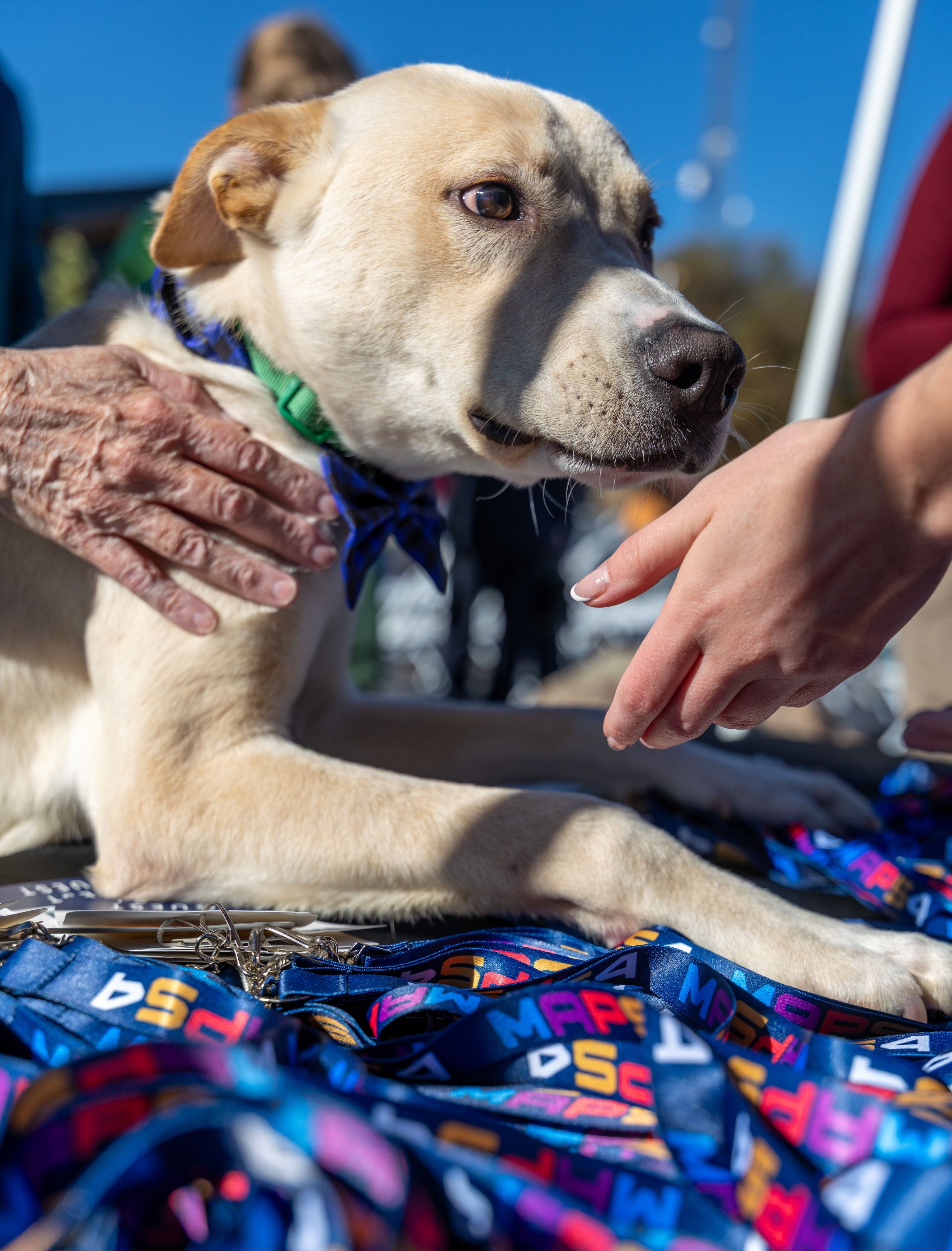
“The most important thing that an animal welfare center can do is adopt out animals. That is really the most valuable service it can provide to a city,” Holt said.
The building features separate cat and dog kennel wings designed to create quieter, less stressful spaces for pets awaiting adoption, nearly tripling the available square footage of the dog kennel areas. Large, configurable kennels will more than double the current capacity for dogs if needed. Cat housing at the facility will double in size, and the center includes outdoor play yards covered with artificial turf for exercise and socialization.
A fourteen-foot-tall carbon steel sculpture of a wind-blown dog, created by artist Olga Ziemska, will be installed this winter.
A second phase of the project will add a 2,800-square-foot barn and pasture. Construction will begin next year after the old building is demolished.
“(Louisa’s) legacy will live on through the animals who receive care here, the families who are reunited with their lost pets, and the countless new beginnings that will take place within these walls,” Sandoval said.
Kirkpatrick Policy Group is a non-partisan, independent, 501(c)(4) nonprofit organization established in 2017 to identify, support, and advocate for positions on issues affecting all Oklahomans, including concern for the arts and arts education, animals, women’s reproductive health, and protecting the state’s initiative and referendum process. Improving the quality of life for Oklahomans is KPG’s primary vision, seeking to accomplish this through its values of collaboration, respect, education, and stewardship.